California backyards are made for grilling, and in Anaheim that means grease is a regular presence on both outdoor stone surfaces and kitchen countertops near the cooktop. Grease is one of the more stubborn stains you will encounter on either granite or engineered quartz countertops, not because it is impossible to remove but because it behaves differently from most kitchen spills and because the wrong cleaning products can cause more damage than the grease itself. This care guide from Block Tops covers the correct approach for both surfaces and explains what to avoid entirely.
How Cooking Grease Behaves on Stone
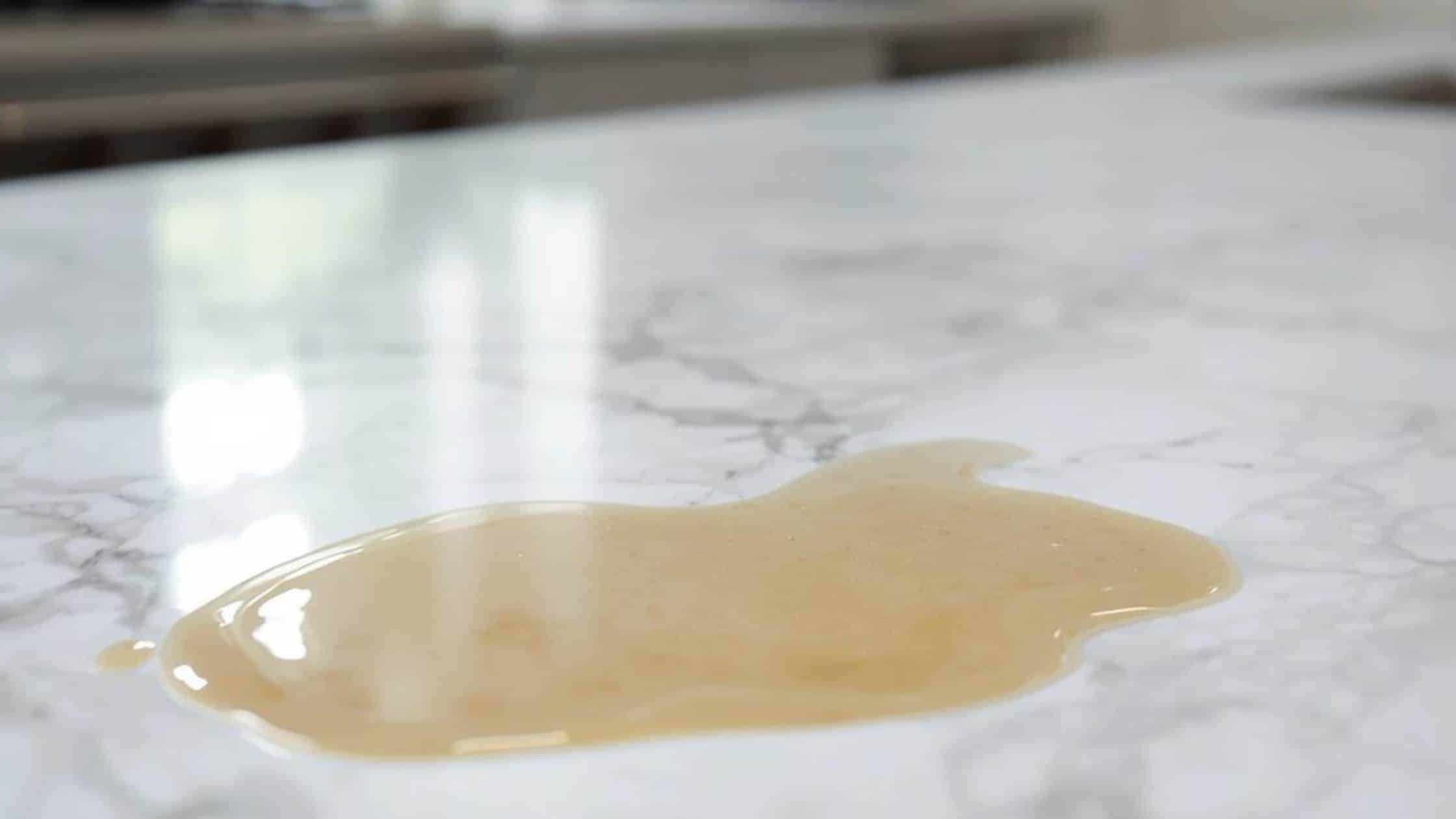
Most kitchen spills are water-based and respond to standard surface cleaning. Cooking grease is oil-based, and that fundamental difference changes how it interacts with stone. Hot grease from a grill or high-heat cooking can penetrate the pores of unsealed or under-sealed granite almost immediately on contact. As it cools, it solidifies within the pore structure and bonds to the mineral composition of the stone. The longer it remains, the more thoroughly it bonds.
On engineered quartz, the non-porous resin surface prevents penetration. But grease still adheres to the surface, and grease that has been heated and cooled repeatedly can develop a carbonized layer that is significantly harder to clean than a fresh spill. The most important principle for both surfaces is the same: the faster you address a grease spill, the easier it is to remove completely.
grease stain removal granite quartz Anaheim
Removing Grease from Granite
For outdoor granite in Anaheim and for kitchen granite near the cooktop, grease is the stain type most likely to cause lasting problems if left unattended. Here is what works:
Fresh grease: blot with a clean paper towel using a gentle dabbing motion. Wiping spreads the oil outward and pushes it deeper into the surface. Apply a small amount of pH-neutral dish soap directly to the stain and work it in gently with a soft cloth in circular motions. Allow it to rest for two to three minutes, then rinse thoroughly with warm water and dry the surface completely.
Set or hardened grease: the poultice method is the most reliable solution. Mix baking soda with a small amount of dish soap and enough water to create a thick paste. Apply the paste directly over the stain, cover with plastic wrap sealed at the edges, and leave it in place for 12 to 24 hours. The drying paste draws oil out of the pores. Remove the covering, rinse away the paste, and repeat for stubborn stains.
After treating any grease stain on granite, run the water drop test to check the sealer. If water holds a rounded bead, the sealer is intact. If it flattens or absorbs, reseal that area before the surface takes on more grease exposure.
Removing Grease from Engineered Quartz
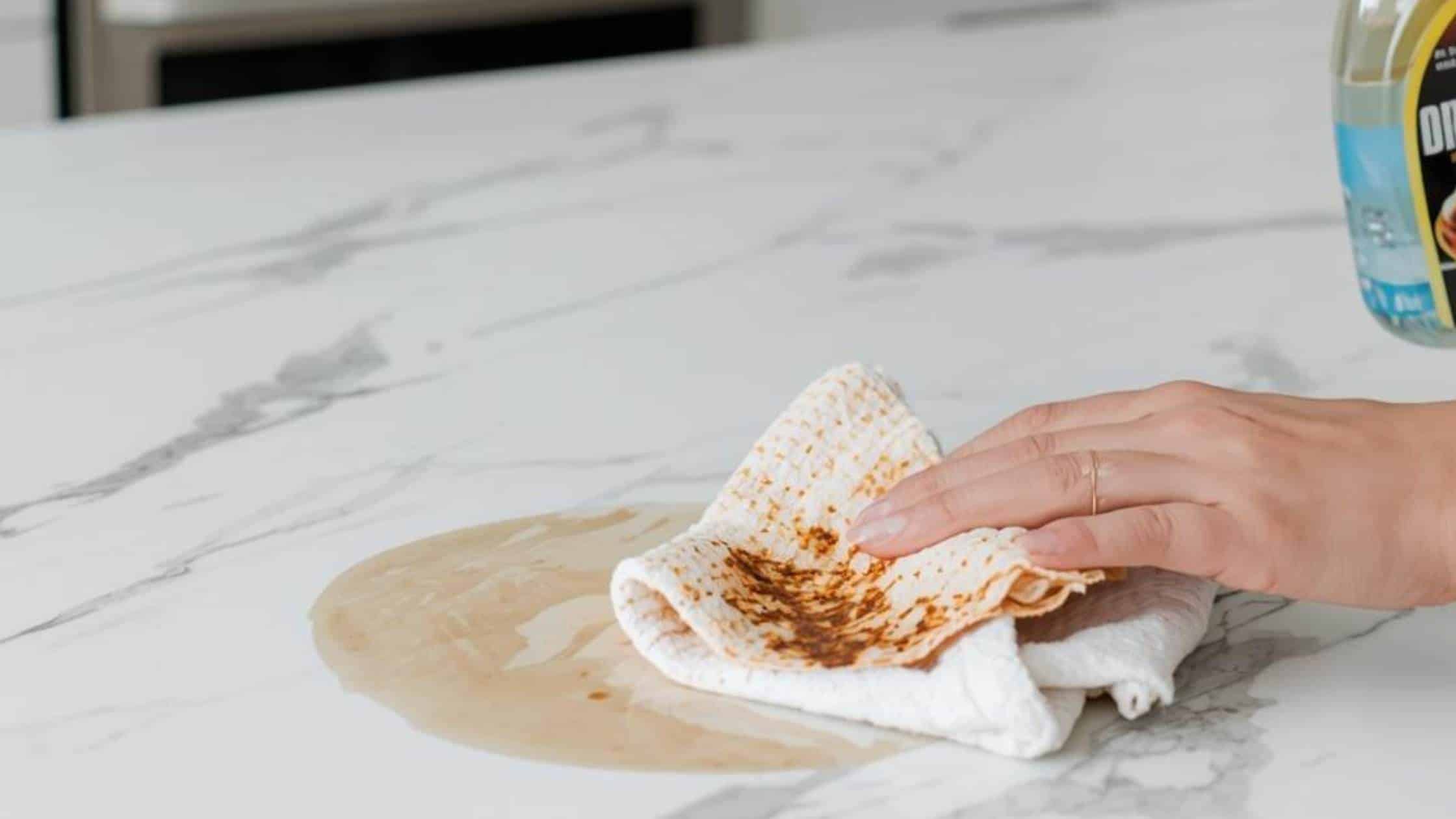
Fresh grease on quartz is straightforward: pH-neutral dish soap on a damp microfiber cloth, worked in gentle circular motions, then rinsed and dried. The non-porous surface does not allow the grease to penetrate, which makes fresh spills easy to address.
Baked-on or carbonized grease requires more deliberate treatment. Use a plastic scraper to lift any hardened surface deposits without scratching the stone. Follow with dish soap and a non-abrasive cloth for the remaining residue. For stubborn carbonized buildup, a small amount of isopropyl alcohol applied with a soft cloth, left for 30 seconds, then wiped and rinsed removes what soap and water alone cannot.
Never use abrasive scrubbing pads, steel wool, or scouring powders on quartz. They create micro-scratches in the surface finish that accumulate over time, dull the appearance, and make the surface harder to clean going forward.
Products That Will Make Things Worse
- Bleach or bleach-based cleaners: degrade the resin bonds in quartz and strip sealers on granite over time
- Citrus-based degreasers: the acid content attacks granite sealer and can dull the resin finish on quartz with repeated use
- Vinegar or acidic cleaning solutions: harmful to both granite sealer and quartz resin
- Abrasive scrubbers or powdered cleansers: scratch quartz surfaces and can mar polished granite
- Oven cleaner: far too caustic for any natural stone or engineered stone surface
Prevention Habits for Anaheim Homeowners
In Anaheim’s outdoor cooking culture, grease prevention is as important as knowing how to clean it. A few consistent habits significantly reduce the amount of cleanup required:
- Wipe down outdoor granite after every grilling session while the surface is still warm. Warm grease releases from the surface far more easily than cooled, hardened deposits.
- Keep a pH-neutral stone cleaner accessible at the outdoor kitchen for immediate response to spills
- Seal outdoor granite annually. A fresh sealer provides a meaningful barrier that makes grease cleanup faster and more complete and protects the stone from absorption
- Use a splatter screen near high-heat burners for indoor cooking surfaces
- Address grease spills promptly rather than leaving them while the meal finishes
how to remove grease from quartz
Frequently Asked Questions
Will grease permanently stain outdoor granite in Anaheim?
Not with prompt action and maintained sealing. Grease that penetrates deeply into unsealed or under-sealed granite can create a darkening stain that requires multiple poultice treatments or professional resurfacing. A well-sealed surface provides a window to clean up before the oil bonds permanently. Annual sealing for outdoor granite in California is the most practical preventive step.
Can I use a kitchen degreaser on my quartz countertops in Anaheim?
Most commercial kitchen degreasers are formulated for commercial use and contain acids, bleach, or high-alkalinity compounds that are not quartz-safe. Look specifically for a product labeled as safe for quartz or engineered stone. For most grease situations on quartz, pH-neutral dish soap and warm water is all you need and carries no risk to the surface.
How often should I seal the granite near my outdoor grill in Anaheim?
Annual sealing is the right baseline for outdoor granite in California. Anaheim’s dry climate means sealers on indoor granite last longer than in humid markets, but outdoor granite and stone near sun-facing windows still sees meaningful UV wear over time. Running the water drop test in the grilling zone once per season is a practical way to stay ahead of any gaps in coverage.
Stone Care and Countertop Questions? Talk to Block Tops in Anaheim
Whether you are working through a stubborn grease stain or planning a new kitchen countertop project in Anaheim, the Block Tops team is ready to help. Visit our Anaheim showroom, find us on Google Maps, or browse our countertop options to get started.